
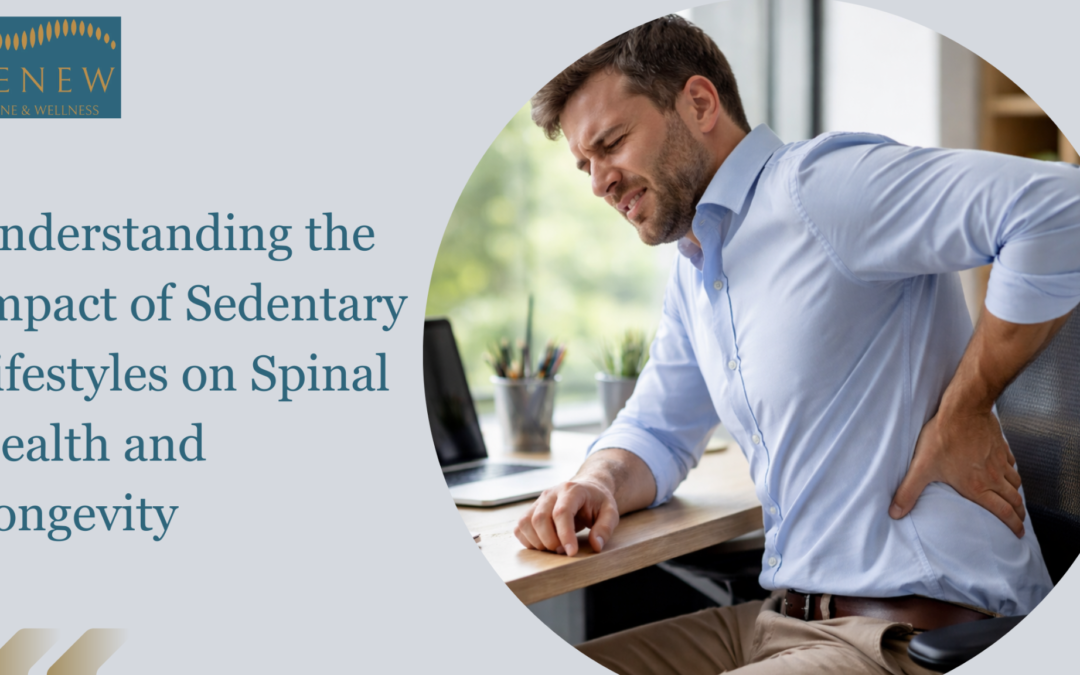
- Sedentary lifestyles gradually alter spinal structure by increasing disc compression, weakening core stability, tightening hip flexors, and disrupting natural posture, leading to long-term strain.
- Reduced movement not only affects spinal alignment but also impacts circulation, nervous system function, and inflammation levels, all of which influence overall longevity and quality of life.
- Intentional movement, ergonomic awareness, strengthening exercises, professional chiropractic care, and supportive nutrition work together to protect spinal health and help reverse the effects of prolonged sitting in a modern, desk-driven world.
Most people wake up thinking about deadlines, emails, traffic, and dinner plans. Meanwhile, the spine quietly carries the weight of all of it. Hours at a desk. Evenings on the couch. Long commutes. Constant screen time. Movement has slowly been replaced with sitting, and it has become the default posture of modern life. The issue is not comfort. It’s the repetition. The human body was designed for motion, not stillness. When movement decreases, the spine absorbs the consequences. If you have ever felt stiffness after a long workday or tightness in your lower back after binge-watching a series, you have already experienced the early signals.
Here is what a sedentary lifestyle is really doing to your spinal health and long-term longevity.
1. How Prolonged Sitting Quietly Alters Spinal Structure
Sedentary habits do not create dramatic injury overnight. They create subtle structural shifts that accumulate over time.
a. Forward Head Posture and Cervical Strain
When you lean toward a screen, your head moves forward. That small shift multiplies the load placed on the cervical spine. For every inch your head tilts forward, the effective weight on your neck increases significantly.
Over time, this creates a muscular imbalance. The deep neck flexors weaken. The upper trapezius tightens. The natural curve of the cervical spine begins to flatten.
What starts as occasional stiffness can evolve into chronic tension headaches, nerve irritation, and limited range of motion. The spine is adaptable, but it adapts to whatever position you repeat most often.
b. Compression of Lumbar Discs
Sitting increases pressure within the lumbar discs compared to standing. When posture is slouched, that pressure intensifies.
The intervertebral discs rely on movement to receive nutrients and do not have a direct blood supply. Instead, they depend on fluid exchange that occurs when you move, bend, and shift positions.
Prolonged sitting reduces that exchange. Over time, discs can dehydrate and lose resilience, increasing vulnerability to bulging or herniation.
c. Hip Flexor Tightness and Pelvic Imbalance
When you sit for extended periods, the hip flexors shorten. Tight hip flexors tilt the pelvis forward, which exaggerates the lumbar curve.
This anterior pelvic tilt increases strain on the lower back and alters alignment throughout the kinetic chain. The spine does not function independently. It responds to what the hips are doing.
If the pelvis is misaligned, the spine compensates.
d. Reduced Core Activation
Sitting requires minimal core engagement. Over time, deep stabilizing muscles weaken.
Without strong core support, the spine relies more heavily on passive structures like ligaments and discs. This increases the likelihood of strain and instability.
A weak core does not always feel obvious. It often shows up as fatigue, poor posture, or recurring low back discomfort.
e. Decreased Thoracic Mobility
The mid-back is designed for rotation and extension. Sedentary postures restrict both.
When thoracic mobility decreases, the cervical and lumbar regions compensate. That compensation increases wear and tear in areas that are already vulnerable.
Stiffness in the mid-back may seem minor, but it alters breathing patterns and rib cage expansion, which affects overall vitality.
2. The Long-Term Impact on Overall Health and Longevity

Spinal health is not only about comfort. It influences nerve communication, circulation, and the body’s ability to function efficiently.
a. Nervous System Interference
The spine protects the spinal cord, which transmits signals between the brain and body. Misalignments can create mechanical stress on surrounding tissues.
While not every postural shift causes nerve compression, chronic dysfunction increases irritation and inflammation in nearby structures.
Maintaining spinal alignment supports optimal neurological communication, which plays a role in organ function, coordination, and recovery.
b. Reduced Circulation and Tissue Oxygenation
Movement stimulates blood flow. Prolonged sitting reduces it.
Poor circulation affects muscle recovery and joint lubrication. When tissues do not receive adequate oxygen and nutrients, they fatigue faster and heal more slowly.
Over the years, reduced circulation contributes to systemic health challenges that extend beyond back pain.
Stiff joints and lingering soreness are often early warning signs that tissues are not being properly nourished. Without consistent movement to stimulate blood flow, even minor strains can take longer to resolve and may become recurring issues.
c. Metabolic Slowdown
Sedentary behavior is associated with metabolic decline. When muscles are inactive, insulin sensitivity decreases, and fat metabolism slows.
Spinal discomfort can discourage physical activity, creating a cycle of reduced movement and increased strain.
Longevity is not only about lifespan. It is about the quality of life. Mobility and metabolic health are deeply connected.
d. Chronic Inflammation
A sedentary lifestyle can contribute to low-grade systemic inflammation. Inflammation affects joint health, immune function, and overall resilience.
Spinal stress compounds this effect. Ongoing muscular tension and joint restriction increase inflammatory responses in localized areas.
Over time, the body becomes less adaptable.
e. Accelerated Degenerative Changes
Degeneration is a natural part of aging. However, inactivity can accelerate wear patterns.
When joints are not regularly mobilized, cartilage health declines. Muscles that support the spine weaken, increasing the load on discs and facet joints.
Healthy aging requires strategic movement and proactive care.
3. Supporting Spinal Health in a Sedentary World
Modern life may involve screens and desks, but that does not mean spinal decline is inevitable. The body is remarkably responsive when given the right stimulus. Even small, intentional corrections can restore function and slow long-term wear patterns.
a. Intentional Movement Breaks
Small, consistent movement is powerful. Standing every 30 to 60 minutes, performing light stretches, or walking briefly improves circulation and joint mobility.
Movement does not need to be intense. It needs to be frequent. Consistency is more effective than occasional bursts of exercise.
Adding simple spinal extension stretches or shoulder rolls during these breaks helps counteract forward posture. Over time, these micro-adjustments retrain muscle memory and reduce accumulated tension before it becomes pain.
b. Ergonomic Awareness
Chair height, monitor positioning, and keyboard alignment influence posture.
The top of your screen should align near eye level. Feet should rest flat on the floor. Hips and knees should remain at roughly 90 degrees. Ergonomics does not eliminate the need for movement, but it reduces strain while you are seated.
It is also helpful to alternate between sitting and standing if possible. Changing positions throughout the day distributes load more evenly across the spine and reduces pressure on any single region.
c. Strengthening and Mobility Training
Strengthening the core, glutes, and upper back creates structural support.
Mobility work for the thoracic spine and hips restores natural movement patterns. When muscles support the skeleton effectively, the spine experiences less passive strain.
Exercise is preventive medicine for spinal longevity.
Incorporating controlled movements like planks, bridges, and rotational stretches builds endurance in stabilizing muscles. Over time, this resilience protects the spine during daily activities such as lifting, bending, and prolonged sitting.
d. Professional Spinal Care
Routine evaluation allows early identification of misalignments and restricted motion.
Targeted chiropractic adjustments can restore joint mobility, reduce muscular tension, and improve overall spinal alignment.
Many patients also experience broader improvements due to the benefits of spinal adjustments, including enhanced flexibility and reduced discomfort during daily tasks.
Proactive care often prevents small imbalances from becoming chronic issues.
Regular assessments also provide accountability and guidance. When spinal health is monitored consistently, subtle changes are addressed early, reducing the likelihood of more invasive interventions later.
e. Nutritional and Lifestyle Support
Inflammation and tissue health are influenced by diet.
Through services such as nutritional testing and supplements, patients can identify deficiencies that affect recovery and musculoskeletal resilience.
Supporting the body internally enhances the effectiveness of physical therapies and promotes sustainable longevity.
Hydration, balanced micronutrient intake, and anti-inflammatory food choices all contribute to tissue repair and joint health. When internal systems function optimally, the spine is better equipped to handle daily physical demands.
Your Spine Sets the Pace for Your Future
Sedentary living does not cause immediate collapse. It causes gradual compromise. The spine adapts to what it experiences most often. If it experiences compression and stillness, it stiffens. If it experiences alignment and movement, it strengthens. Longevity is not accidental. It is built through daily habits and consistent care. Your future mobility is shaped by how you treat your spine today. Small shifts in posture, movement, and professional support compound over time. The goal is not perfection. It is awareness and action.
Renew Spine and Wellness Chiropractic Center is where modern lifestyles meet proactive spinal care. Get in touch for personalized evaluations, targeted chiropractic care, and guidance that helps you move better, feel stronger, and protect your spinal health for the long term.