
Your spine serves as the central support structure for your entire body, housing the nervous system that controls every function from breathing to digestion. When your vertebrae fall out of their optimal positioning, the effects extend far beyond simple back discomfort. Proper spinal alignment represents the foundation of your body's structural integrity, influencing everything from how you move to how efficiently your organs function. Understanding what creates and maintains healthy spine positioning empowers you to make informed decisions about your daily habits, workspace setup, exercise routines, and overall wellness strategies.
Understanding the Fundamentals of Spinal Alignment
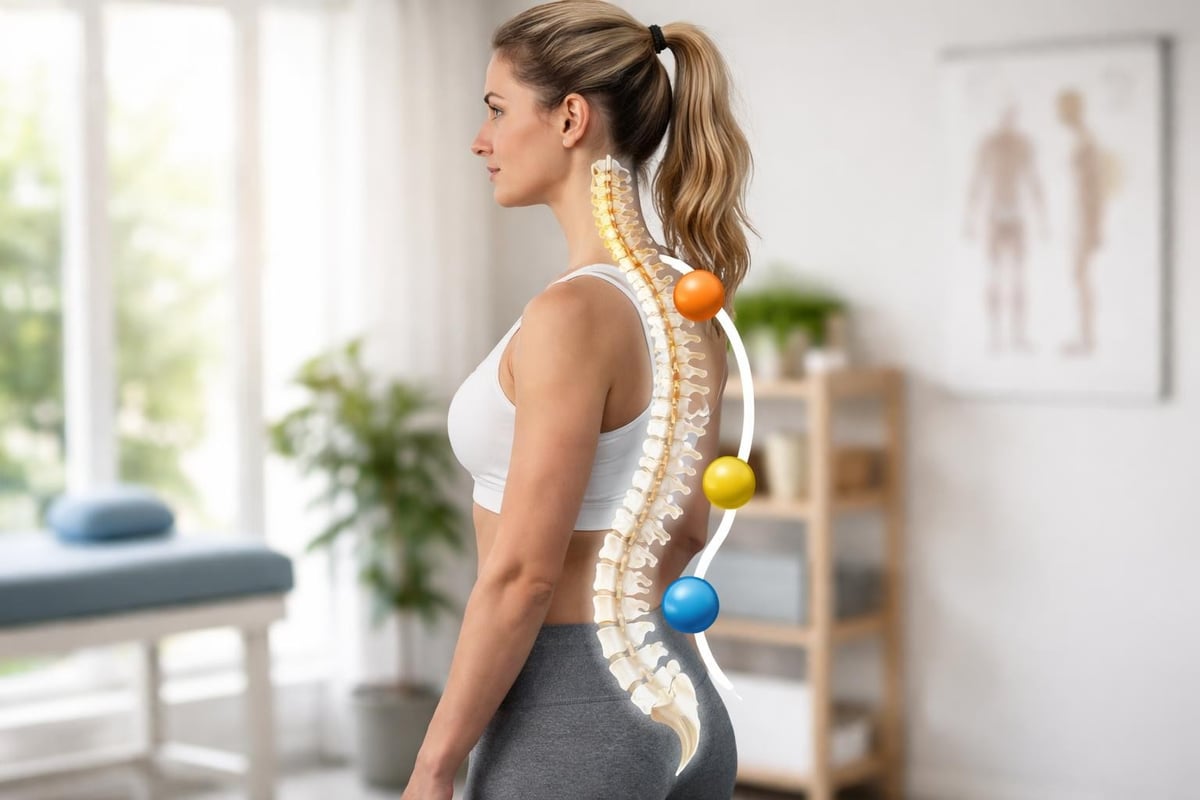
The human spine contains 33 vertebrae organized into five distinct regions, each with specific curves that work together to distribute weight efficiently. These natural curves create an S-shaped profile when viewed from the side, with the cervical and lumbar regions curving inward (lordosis) and the thoracic and sacral regions curving outward (kyphosis).
Optimal positioning requires:
- Proper cervical curve maintaining head position directly over shoulders
- Balanced thoracic curve preventing excessive rounding
- Healthy lumbar curve supporting the lower back
- Neutral pelvis alignment anchoring the entire structure
When these curves maintain their natural relationships, your body achieves mechanical efficiency that minimizes stress on muscles, ligaments, and intervertebral discs. Research on spinal posture demonstrates how deviations from this neutral positioning create compensatory patterns throughout the kinetic chain.
The Nervous System Connection
Beyond structural support, spinal alignment directly affects nervous system function. Your spinal cord runs through the vertebral column, sending nerve branches through openings between each vertebra. Misalignments can create pressure or interference with these nerve pathways, potentially affecting organ function, muscle coordination, and sensory perception.
The services provided by chiropractic professionals focus specifically on identifying and correcting these misalignments to restore optimal nervous system communication. When vertebrae shift from their ideal positions, the surrounding muscles compensate, creating tension patterns that can persist long after the initial cause.
Common Causes of Misalignment
Modern lifestyle factors contribute significantly to spinal positioning problems. Extended sitting represents one of the most pervasive contributors, with the average American spending over 13 hours daily in seated positions. This prolonged flexion weakens posterior chain muscles while tightening hip flexors and anterior structures.
| Lifestyle Factor | Impact on Spine | Prevention Strategy |
|---|---|---|
| Desk Work | Forward head posture, thoracic rounding | Ergonomic setup, movement breaks |
| Smartphone Use | Text neck, cervical strain | Eye-level device positioning |
| Poor Sleep Position | Unnatural curves during rest | Supportive mattress and pillow |
| Repetitive Movements | Asymmetrical loading patterns | Balanced activity, cross-training |
| Sedentary Behavior | Muscle weakness, disc compression | Regular strengthening exercises |
Technology use particularly affects cervical alignment. For every inch your head moves forward from neutral, the effective weight on your neck increases by approximately 10 pounds. At a 60-degree forward tilt typical of smartphone use, your neck supports nearly 60 pounds of force.
Structural and Developmental Factors
Some alignment issues develop from congenital conditions, injuries, or degenerative processes. Scoliosis, affecting approximately 2-3% of the population, creates lateral curvature with rotational components. These complex spinal deformities require specialized assessment and management approaches.
Previous trauma from accidents, sports injuries, or falls can create lasting compensatory patterns. Even after pain resolves, the body may maintain protective positioning that becomes habitual. Similarly, pregnancy introduces significant biomechanical changes that affect pelvic and lumbar alignment, making chiropractic care during pregnancy particularly valuable.
Degenerative disc disease, arthritis, and osteoporosis progressively alter vertebral spacing and positioning. These age-related changes make maintenance of proper alignment increasingly important to preserve function and prevent acceleration of degeneration.
Assessment and Evaluation Methods
Professional evaluation of spinal alignment employs multiple assessment techniques. Postural analysis examines standing alignment from anterior, posterior, and lateral views, identifying asymmetries, shifts, and curve abnormalities. Chiropractors look for shoulder height differences, pelvic tilts, head positioning, and weight distribution patterns.
Comprehensive assessment includes:
- Visual postural screening
- Range of motion testing
- Palpation for muscle tension and vertebral positioning
- Neurological examination
- Functional movement evaluation
- Imaging when indicated
Digital posture analysis systems and specialized photography provide objective measurements of alignment deviations. Advanced technologies like artificial intelligence models are now being developed to predict spinopelvic parameters with increasing accuracy, enhancing diagnostic precision.
Functional assessments reveal how alignment affects movement quality. Observing gait patterns, squat mechanics, and reaching movements demonstrates real-world implications of structural deviations. These dynamic evaluations often identify compensatory patterns that static postural analysis might miss.

Technological Advances in Evaluation
Deep learning approaches like B-Spine algorithms now enable robust spinal curvature estimation from imaging studies. These technological innovations provide quantifiable metrics for tracking alignment changes over time, helping practitioners document progress and refine treatment approaches.
Surface topography and marker-based systems offer non-invasive alternatives to radiation-based imaging. Research exploring skin marker-based modeling demonstrates feasibility for subject-specific alignment assessment, potentially expanding access to detailed postural analysis.
Daily Habits That Support Proper Alignment
Creating and maintaining healthy spinal positioning requires consistent attention to daily activities. Ergonomic workspace design forms the foundation for anyone spending significant time at a desk. Monitor height should position the top of the screen at or slightly below eye level, preventing the forward head posture that strains cervical structures.
Chair selection and adjustment prove equally critical. Proper lumbar support maintains the natural inward curve of the lower back, preventing the posterior pelvic tilt common in unsupported sitting. Feet should rest flat on the floor with knees at approximately 90 degrees, distributing weight evenly across the pelvis.
Movement and Exercise Strategies
Regular movement breaks interrupt prolonged static positioning. Standing every 30 minutes, performing brief stretches, and changing positions prevents the muscle fatigue and disc compression associated with extended sitting. Even simple activities like walking while taking phone calls or standing during meetings contribute to better alignment.
Strengthening exercises targeting core stability and posterior chain muscles create the muscular foundation for maintaining proper positioning. Dead bugs, planks, bird dogs, and bridges develop the endurance necessary for sustained postural control without conscious effort.
- Core stabilization exercises build endurance in deep abdominal and back muscles
- Thoracic mobility work counteracts rounding from desk posture
- Hip flexor stretching releases tension from prolonged sitting
- Scapular strengthening supports proper shoulder positioning
- Cervical retraction exercises address forward head posture
Yoga and Pilates practices emphasize spinal awareness and controlled movement through full ranges of motion. These modalities develop proprioception-your body's awareness of its position in space-which supports automatic postural corrections throughout daily activities.
Sleep Position and Support Systems
Sleep represents nearly one-third of your life, making nighttime positioning crucial for spinal health. Mattress selection significantly impacts alignment maintenance during rest. The ideal sleep surface provides enough support to prevent sagging while offering sufficient contouring to accommodate natural curves.
Different mattress types offer varying benefits. Memory foam provides excellent pressure relief and contouring but may retain heat. Innerspring mattresses offer strong support with good temperature regulation but less pressure distribution. Hybrid designs like the Hybrid Infinity mattress combine responsive coils with conforming comfort layers for balanced support.
Research examining hybrid mattresses for back pain suggests these combinations effectively maintain spinal alignment across various sleep positions. Natural latex options like the Avocado Green Euro Top provide durable support with responsive contouring and temperature-neutral properties.
| Sleep Position | Alignment Considerations | Support Recommendations |
|---|---|---|
| Back Sleeping | Maintains natural curves | Moderate firmness, pillow under knees |
| Side Sleeping | Requires hip/shoulder cushioning | Medium-soft with thick pillow |
| Stomach Sleeping | Creates cervical/lumbar stress | Generally discouraged |
Pillow height and firmness must match your sleep position and body proportions. Side sleepers require thicker pillows to fill the space between shoulder and head, maintaining cervical neutrality. Back sleepers need thinner pillows that don't push the head too far forward.

Creating an Optimal Sleep Environment
Beyond mattress and pillow selection, sleep position habits affect alignment. Placing a pillow between the knees when side sleeping maintains pelvic neutrality and reduces lumbar rotation. For back sleepers, a small roll under the knees maintains slight knee flexion that relaxes hip flexors and supports lumbar curve.
The Nectar mattress represents another popular option providing pressure relief through multiple foam layers designed to support spinal positioning. Evaluating your specific needs based on body type, pain patterns, and sleep preferences helps identify the most appropriate support system.
Professional Care and Corrective Approaches
While self-care strategies provide important foundations, professional assessment and treatment often accelerate alignment improvement. Chiropractic adjustments specifically target vertebral positioning, using controlled force to restore proper motion and alignment to restricted segments.
These corrections help reprogram neuromuscular patterns that maintain misalignments. Even when you're not experiencing pain, regular adjustments support optimal nervous system function and prevent the development of compensatory patterns that lead to future problems.
Professional care benefits include:
- Precise identification of specific misalignments
- Targeted corrections addressing root causes
- Personalized exercise and lifestyle recommendations
- Objective progress tracking through reassessment
- Education about maintaining improvements
Soft tissue techniques complement structural corrections by releasing muscle tension patterns that pull vertebrae from optimal positioning. Myofascial release, trigger point therapy, and instrument-assisted techniques address the muscular components of alignment dysfunction.
Rehabilitation and Long-Term Management
Corrective exercise programs teach proper movement patterns that support maintained improvements. These protocols progress from basic stability work through functional movements that integrate corrections into daily activities. Patient education ensures understanding of how daily choices either support or undermine alignment goals.
For developing bodies, early intervention proves particularly valuable. Chiropractic care for children addresses alignment issues before compensatory patterns become deeply ingrained, supporting healthy growth and development.
Workplace Modifications and Ergonomic Solutions
Creating an alignment-supportive work environment requires systematic evaluation of your workspace. Desk height should allow forearms to rest parallel to the floor when typing, preventing shoulder elevation and upper trapezius tension. Keyboard and mouse positioning within easy reach eliminates forward reaching that rounds thoracic structures.
Dual monitor setups require careful planning to prevent habitual rotation toward one screen. Positioning primary monitors directly in front and secondary screens at angles that require full head turns rather than sustained rotation prevents asymmetrical loading patterns.
Standing desk converters or adjustable-height desks enable position changes throughout the workday. Alternating between sitting and standing prevents the muscle fatigue associated with static positioning while maintaining productivity. Transition gradually, starting with 15-20 minute standing intervals and progressively increasing duration as tolerance builds.
Occupational-Specific Considerations
Physically demanding occupations present unique challenges. Manual laborers require education about proper lifting mechanics: maintaining lumbar curve during bends, loading through legs rather than back, and avoiding rotational forces during loaded movements. Tool design and workstation height adjustments reduce repetitive stress on spinal structures.
Drivers face particular risks from prolonged sitting combined with whole-body vibration. Lumbar support cushions, regular rest stops with walking and stretching, and seat positioning that maintains curves help mitigate these occupational hazards.
Healthcare workers, teachers, and service industry professionals who stand extensively need equally thoughtful strategies. Anti-fatigue mats reduce stress from hard surfaces, and attention to weight distribution between feet prevents asymmetrical loading. Proper footwear with adequate arch support and cushioning protects the foundation that alignment builds upon.
Long-Term Health Implications
Maintaining proper spinal positioning throughout life significantly impacts overall health trajectories. Beyond preventing back pain, optimal alignment supports efficient breathing mechanics by allowing full rib cage expansion. Cardiovascular function benefits from improved circulation that unrestricted thoracic positioning enables.
Digestive health connects to spinal alignment through both mechanical and neurological pathways. Slouched postures compress abdominal organs, potentially affecting digestive transit. Additionally, thoracic and lumbar nerve roots influence digestive system function through autonomic nervous system connections.
Research associates chronic misalignment with:
- Increased headache frequency and intensity
- Reduced lung capacity and respiratory efficiency
- Accelerated degenerative disc disease
- Higher injury risk during physical activity
- Compromised balance and fall risk in older adults
Mental health connections to posture have gained research attention in recent years. Studies suggest that upright, open postures correlate with improved mood states and reduced stress hormone levels compared to collapsed, closed positioning. While correlation doesn't prove causation, the mind-body connection warrants consideration in comprehensive wellness approaches.
Monitoring Progress and Maintaining Improvements
Tracking alignment improvements requires both subjective and objective measures. Symptom journals documenting pain levels, frequency, and functional limitations provide important feedback about intervention effectiveness. Noting activities that aggravate or relieve symptoms helps identify problematic movement patterns.
Photographic documentation from consistent angles enables visual comparison over time. Taking monthly photos in standard positions reveals gradual changes that daily observation might miss. Marking plumb lines or reference points enhances these comparisons.
Professional reassessments at appropriate intervals provide objective measurements of postural changes. Range of motion measurements, muscle testing, and specialized imaging when indicated quantify progress beyond subjective improvements. These assessments also identify areas requiring continued attention and allow treatment plan modifications.
Maintenance strategies prevent regression after achieving improvements. Continuing core strengthening exercises, maintaining ergonomic awareness, and scheduling periodic professional evaluations support long-term success. Understanding that alignment represents an ongoing practice rather than a fixed destination promotes sustainable habits.
Optimal spinal alignment forms the foundation for whole-body health, influencing everything from nervous system function to overall quality of life. Whether you're addressing current discomfort or proactively supporting long-term wellness, professional guidance ensures you're building on a solid foundation. At Renew Spine & Wellness Chiropractic Centers, our comprehensive approach identifies the root causes of alignment issues and creates personalized strategies that restore your body's natural balance, helping you achieve lasting wellness through improved spinal health and nervous system integrity.